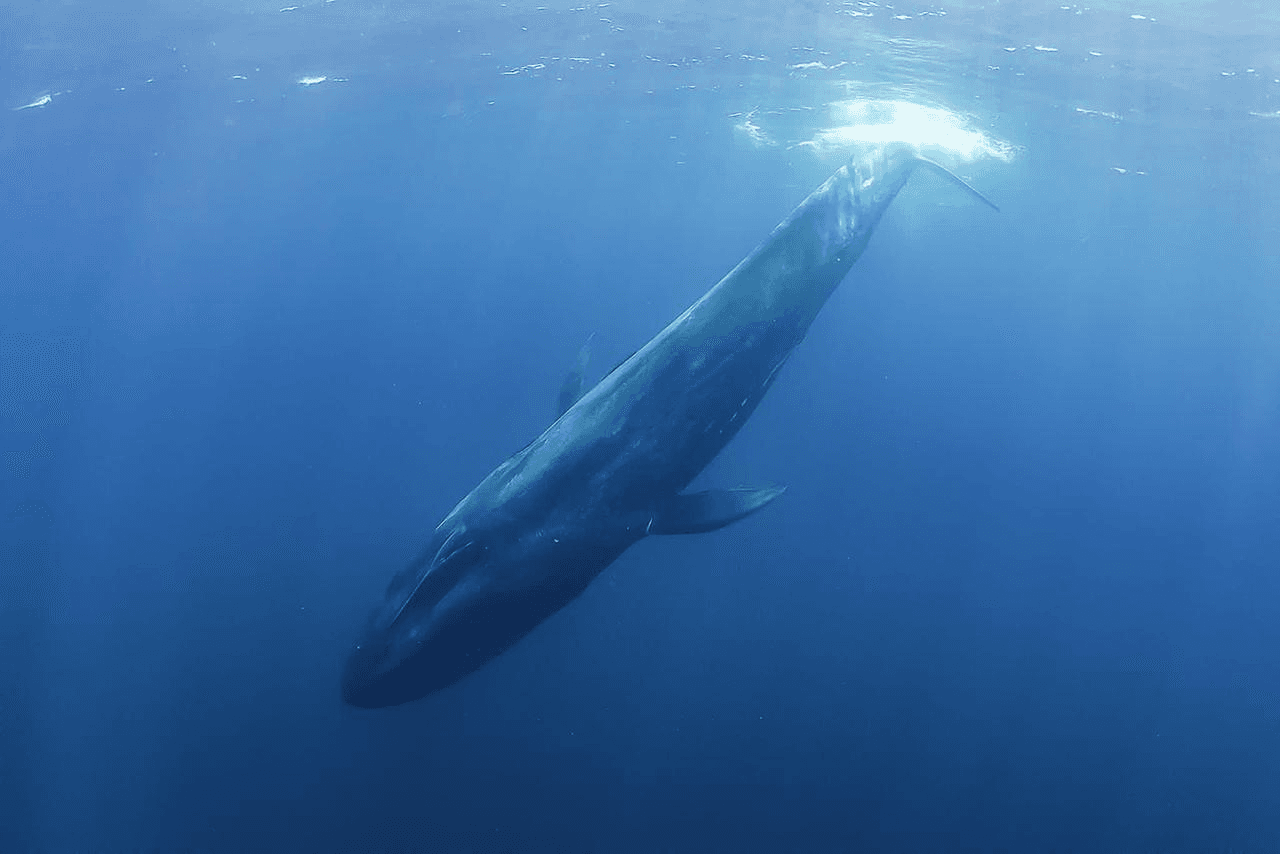
The blue whale is the largest animal to have ever lived, and Mirissa is one of the places built around giving visitors a genuine chance to see one. In fact, our own tours trace back to a small research initiative that began by mapping blue whale migratory routes off Sri Lanka’s southern coast — long before it became a whale watching destination.
Why Visitors Come to Mirissa for Blue Whales
Blue whales migrate along Sri Lanka’s southern coast, and Mirissa grew as a departure point for boats following that route. The interest is straightforward: this is a rare chance to see the largest animal on the planet at relatively close, respectful range, either from a boat deck or in the water.
What You Might Encounter on a Trip
A blue whale sighting usually starts with a blow — a tall burst of spray as the whale surfaces to breathe — followed by a long stretch of its back and, if it dives deep, a glimpse of its tail. Sightings can last from a few seconds to several minutes, and no two encounters look quite the same, since blue whales are wild animals moving on their own schedule.
When Blue Whales May Be Seen
Blue whales are seen off Mirissa broadly from November to April, with December to March being an especially reliable stretch based on our own trip data. For a full month-by-month breakdown of season and sea conditions, see our whale watching season guide.
Other Whales You May Encounter
Blue whales share these waters with sperm whales, fin whales and Bryde’s whales, with occasional humpback sightings. Spinner, bottlenose and Risso’s dolphins are also regularly spotted alongside our whale tours, so a trip built around blue whales often turns into a broader wildlife outing.
Watching from the Boat vs. Snorkeling Alongside Them
There are two ways to encounter blue whales with us. Our Whale Watching Tour keeps you on the boat deck the whole time — no swimming required. Our Whale Snorkeling trip pairs the same kind of boat cruise with a guided, in-water swim alongside the whales, always at a respectful distance. Basic swimming confidence is recommended for the in-water option.
Responsible Viewing & Safety
We follow marine park guidelines and never approach closer than 15–20 metres. Guests are asked to stay calm and quiet in the water, and never touch or chase a whale — any closer encounter happens on the whale’s terms, not ours. You can read more about how we approach this on our conservation and responsible tourism page.
Ready to plan your trip? See the Whale Watching Tour or Whale Snorkeling for full pricing and details.